
Are Ghosts Real
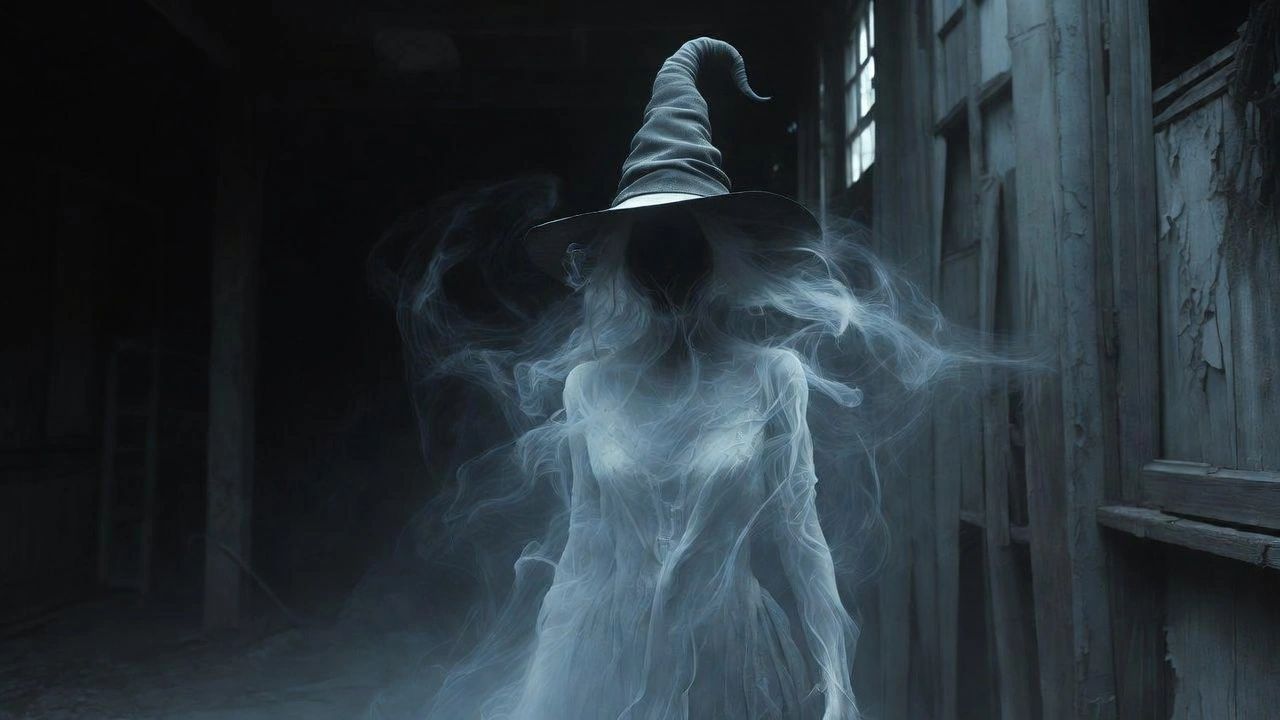
Veils of Shadow and the Soul's Eternal Whisper
Are ghosts real? From the most spine-tingling legends embedded in mortal traditions and beliefs to the enchanting grimoires exploring life's final exhale, let us wander this witchy path. Backed by arcane studies and expert incantations, we confront the veil's secrets, ending with a vast ancestral book of what faiths decree awaits beyond the debt that all mortals pay. May your essence find balance in these mists of beyond.
The Thinning Veil: Most Convincing Ghost Stories That Chill the Blood
Picture a chill wind stirring dead leaves like forgotten spells, where ordinary souls brush against the extraordinary. In bygone eras, such encounters were dismissed as fever dreams or village gossip, crude shadows without form. Yet certain tales rise like high-end elixirs from the earth's depths, documented with witnesses, evidence, and inexplicable persistence—echoing the purifying vapor of eucalyptus warding unseen intruders.
Among the most compelling: The Enfield Poltergeist of 1977, where the Hodgson family in London endured furniture hurled like vengeful spirits, levitating daughters, and voices in unknown tongues—corroborated by police, neighbors, and investigators, with audio recordings capturing the chaos. Or the Bell Witch of Tennessee, 1817–1821, a malevolent entity that tormented the Bell family with slaps, songs, and prophecies, witnessed by hundreds including Andrew Jackson himself, leaving a legacy of documented affliction. The Greenbrier Ghost of West Virginia, 1897, where the spirit of Elva Zona Heaster testified in court—her mother swore the apparition revealed her murder by poisoned tea—leading to the only U.S. trial admitting ghostly evidence, resulting in conviction. And the Sally House in Kansas, with EVP recordings of childlike pleas and full-body apparitions caught on modern cameras, analyzed as among the most disturbing paranormal clips. These are no mere yarns; they linger like persistent thorns in the collective psyche.
A witchy chuckle in the dark: Or maybe the ghosts were just tired of bad real estate deals and decided to file a spectral complaint—next time, sage the corners before signing the lease.
Echoes from the Threshold: Studies Illuminating the Afterlife and Life's Final Breath
In the old ways, the end of life was a brutal severance, shrouded in fear like medicinal herbs losing their virtue. Modern grimoires, however, whisper of phenomena that hint at continuity—near-death experiences (NDEs), deathbed visions, and terminal lucidity—offering clean insight into the soul's potential voyage.
Scholarly tomes abound: Dr. Jeffrey Long's NDERF analysis of thousands of cases reveals nine lines of evidence for NDEs' reality—veridical perceptions during clinical death, blind individuals gaining sight, and profound life transformations like reduced fear of death—medically inexplicable by brain function alone. Brain studies from the University of Michigan show surges in gamma waves—linked to consciousness and memory—up to an hour after cardiac arrest, suggesting a final, vivid inner experience akin to profound serenity or life review. End-of-life dreams and visions (ELDVs) grace 50–88% of hospice patients, with "visitations" from deceased loved ones providing comfort, as synthesized in qualitative reviews. Terminal lucidity—sudden clarity in dementia patients' hours or days before death—occurs in up to 6–10% of cases, with brain activity spikes defying prior decline. These are not hallucinations but potential portals, like calendula-infused balms soothing the spirit's final journey.
A witchy chuckle in the dark: Science says the brain throws one last party before lights out—guess even neurons love a dramatic exit, complete with guest stars from the other side.
Whispers of the Wise: What Experts Decree on the Spectral Realm
Ancient healers consulted oracles for truth; today, experts peer through lenses of psychology, parapsychology, and skepticism. In eras past, ghosts were unquestioned familiars; now, the debate simmers like a high-end herbal tonic—potent yet discerning.
Parapsychologist Christine Simmonds-Moore affirms experiences as profoundly human, whether spirits or psychological echoes, noting a hierarchy from explainable to the profoundly anomalous. Dr. Bruce Greyson, after decades at UVA's Division of Perceptual Studies, sees NDEs as challenging mind-brain separation, hinting consciousness survives. Yet skeptics like physicist Brian Cox and anomalistic psychologists argue no empirical proof exists—ghosts violate physics, with phenomena better explained by pareidolia, infrasound, or expectation. Barry Markovsky, social psychologist, notes belief stems from cultural stories, not verifiable data. The consensus? Experiences feel real, but ghosts remain unproven—much like distilling rosemary for clarity amid the mists.
A witchy chuckle in the dark: Experts can't agree if ghosts are real or just your subconscious throwing shade—either way, don't ghost your live ones.
Shadows on the Screen: Why Ghost Shows Never Unveil a True Apparition
In the crude rituals of yore, charlatans conjured spirits with wires and tricks; today's TV ghost hunts promise revelations yet deliver only flickering shadows. Old methods relied on séances and smoke; modern ones chase EVPs and orbs—but why no solid capture?
The veil stays drawn because entertainment demands drama: crews with walkies, lights, and gadgets trigger false positives—REM pods flare from radio waves, doors slam off-camera for effect. Real investigations span months with 99% tedium; TV condenses to "gotcha" moments, often staged or edited. Skeptics note low evidence standards yield pareidolia, not proof—equipment sensitive to normal physics, not the supernatural. As one investigator confessed, it is "paratainment," not science. True ghosts, if they whisper, evade the spotlight like elusive night-blooming herbs.
A witchy chuckle in the dark: Ghost shows never catch one because the spirits are unionized—demanding residuals and better lighting before they perform.
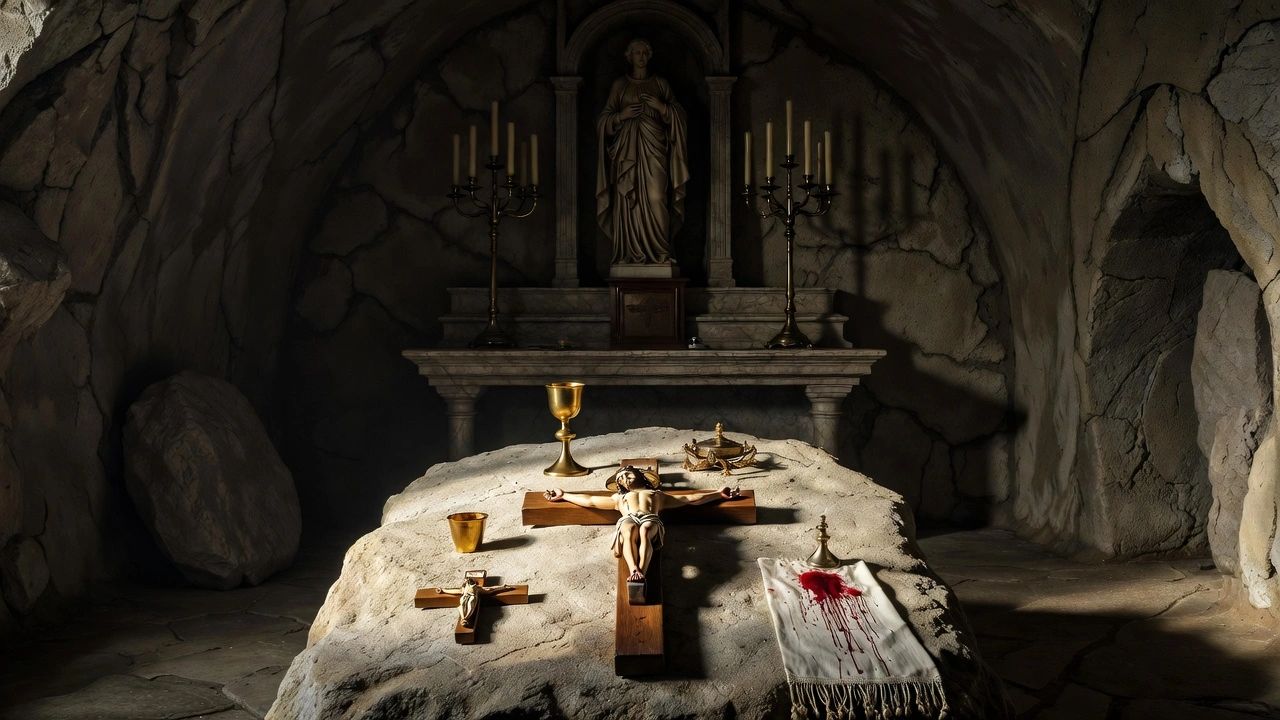
Ancestral Tomes: What Religions Believe Awaits When the Veil Closes
From the earth's vast herbal apothecary of faiths, a grand grimoire unfolds—what happens when the body returns to dust? Beliefs span resurrection's fiery rebirth to reincarnation's endless cycle, each a clean path to soul wellness. Here, an unsparing list drawn from ancient codices and living traditions:
- Christianity: The soul faces judgment; the righteous ascend to eternal Heaven (paradise with God), the wicked to Hell (separation or torment). Resurrection of the body at the end times, as Jesus rose.
- Islam: After death, the soul awaits Judgment Day in Barzakh; the faithful enter Jannah (gardens of bliss), the unrighteous Jahannam (fire of purification or punishment). Bridge of Sirat determines fate.
- Hinduism: Reincarnation via samsara (cycle of rebirth) driven by karma; moksha (liberation) ends the wheel, merging with Brahman. Temporary heavens/hells before next life.
- Buddhism: Rebirth in one of six realms (gods, humans, animals, etc.) based on karma; nirvana extinguishes suffering and the cycle. Bardo (intermediate state) offers insight.
- Judaism: Varied—Olam Ha-Ba (World to Come) for the righteous, a spiritual realm of closeness to God; some emphasize resurrection or soul's rest in Gan Eden; Gehinnom for purification. Focus often earthly.
- Sikhism: Reincarnation until union with Waheguru (God) via good deeds; soul merges eternally, escaping rebirth.
- Jainism: Reincarnation based on karma; liberation (moksha) as pure soul in Siddha-loka, free from cycles.
- Taoism: Immortality or return to Tao (the Way) as energy; ancestors honored, some achieve eternal life through alchemy-like practices.
- Shinto: Spirits (kami) persist; souls join ancestors or become kami in the spirit world; purification rituals aid transition.
- Native American Traditions (varied by tribe): Many see spirits in the afterlife realm or "Happy Hunting Grounds"; ancestors guide the living; some reincarnation or soul journeys to the stars.
- African Traditions (e.g., Yoruba, Zulu): Ancestor spirits (egungun) influence the living from the spirit world; reincarnation common; judgment by deities leads to realms of peace or unrest.
- Paganism/Wicca: Reincarnation in the Wheel of Life; Summerland (restful afterlife) before rebirth; spirits roam or join the God/Goddess.
- Ancient Egyptian: Soul's journey through Duat; weighed against Ma'at's feather for paradise (Field of Reeds) or devouring by Ammit. Mummification aids eternal life.
- Norse/Germanic: Warriors to Valhalla (feasting hall) or Folkvangr; others to Hel (peaceful underworld); Ragnarok renews the cosmos.
- Zoroastrianism: Soul crosses Bridge of Judgment to House of Song (paradise) or House of Lies (punishment); eventual resurrection and final renewal.
- Baha'i Faith: Soul progresses eternally toward God in spiritual worlds; no hell as eternal torment, but distance from divine.
- Confucianism: Ancestor veneration; afterlife as continued familial harmony in spirit form, without strong heaven/hell divide.
- Sufism/Esoteric Islam: Mystical union with the Divine; soul's ascent through stations beyond physical death.
These beliefs, like a high-end blend of earth's botanicals, offer frameworks for graceful passage—each honoring the soul's health in its unique rite.
As the final stars fade into dawn's herbal mist, the question lingers like a half-remembered dream: Ghosts may be the echoes of unfinished journeys, or the soul's clean whisper of eternity. In this witchy dance of shadow and light, tend your spirit with intention—sage your thresholds, steep your teas with mindfulness—and let the veil reveal what it will. For in the end, whether real or reflection, the greatest magic is living with luminous harmony.