
Religion and Witchcraft Might Be Closer Than You Think
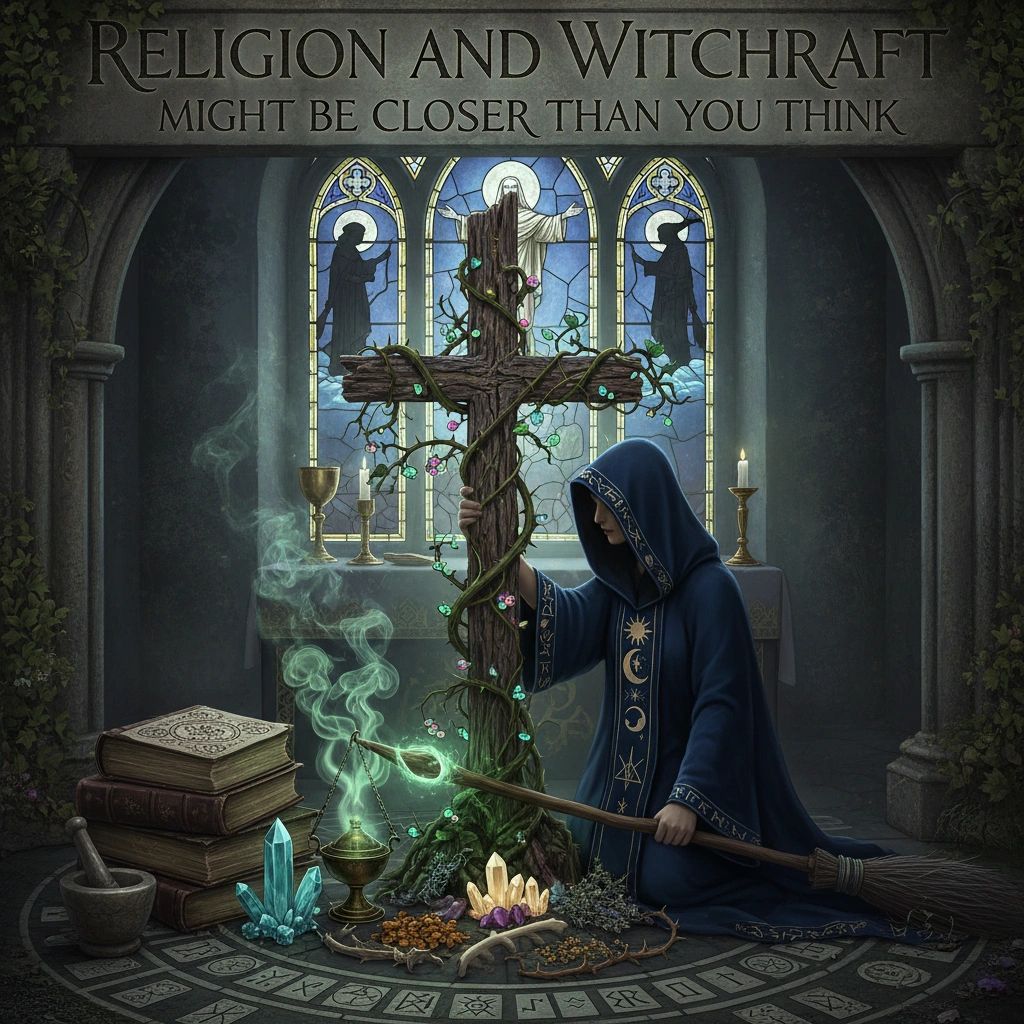
Before anyone sharpens a pitchfork or a hashtag, breathe. This is not a conversion essay. It is not a dunk contest. It is a kitchen-table look at how human beings — across continents, centuries, and very different sacred maps — keep reaching for the same simple tools: smoke, oil, water, fasting, feast, song, and a little quiet that feels like prayer even when nobody agrees on the vocabulary.
Related is not identical. A cousin is not a clone. You can notice the family resemblance without marrying your cousin. That is the whole vibe.
## Incense and Holy Smoke — *The Original Group Chat Notification*
Walk into enough sacred spaces and you will smell the plot twist: fragrance as a door.
Churches swing censers. Temples burn resins. Homes simmer herbs on the stove “just because the house needed clearing,” which is cultural shorthand for *something felt sticky and we did a smell about it.* Across many traditions, smoke has been a courier — carrying intention upward, marking a threshold, telling the room: *we are doing a thing now.*
That does not mean every practice is the same practice. It means humans figured out early that noses remember what calendars forget. When the air changes, the mood changes. When the mood changes, people listen differently. That is not witchcraft stealing from religion or religion stealing from witchcraft. That is animals with language trying to make ordinary air feel like a threshold.
If your grandmother lit something fragrant before guests arrived, she may not have called it ritual. She may have called it manners. Both can be true.
## Blessing Oils and Anointing — *Skincare With Better Metaphors*
Oil shows up everywhere once you start looking: forehead marks, doorposts, hands, tools, babies, travelers, the sick (in pastoral care — not as a substitute for medicine), the newly married, the newly brave.
Cultural note, not a clinical paper: anointing has long signaled *set apart*. Not “better than you.” Set apart as in *this moment gets a different texture.* A dab of oil is a tiny ceremony that fits in a pocket. Witchcraft-adjacent home practice and many religious rites both understand that the body is a landscape where meaning likes to land.
Charming undertone: nobody invented “rub something nice on a person you care about.” We just keep rediscovering it and arguing about the brand name.
## Fasting and Feasting — *The Calendar’s Mood Swings*
Some paths empty the plate. Some paths load it. Many do both on a schedule that looks suspiciously like emotional engineering with better costumes.
Fasting — cultural pattern, not a prescription — has been used as focus, solidarity, repentance, preparation, or simply “we do this because our people do this.” Feast days arrive like confetti after the quiet: bread, wine, sweets, shared tables, leftover stories. Witchcraft-leaning seasonal celebrations and religious feast calendars both understand that the year is not flat. Time has hills. People need hills.
You do not have to share theology to share the instinct: *pause, then celebrate; empty, then fill; gather, then go home smelling like someone else’s cooking.*
## Water Rites — *The Original “Reset” Button*
Water is the universal intern. It shows up for baptism, immersion, ablution, river offerings, bowl-on-the-altar stillness, morning face-washing that somehow feels more serious when you name it.
Cultural history is full of water as boundary and beginning. Cross a river, enter a new chapter. Pour a little out for those who came before. Wash hands before the holy. Dip fingers and remember. None of that requires you to collapse every tradition into one TikTok explanation. It only asks you to notice: humans keep using water when words feel too dry.
And yes, a long shower after a hard day can feel adjacent. That does not make your shower a sacrament. It makes you a mammal who understands rinse cycles.
## The Fight Is Rarely About the Candle
Here is the deep humor hiding under the incense: people argue about candles, herbs, and moon phases as if the candle started the war. Often the real friction is about authority, belonging, fear of being replaced, or the terror that someone else’s map might still lead somewhere beautiful.
Guest manners help. If a practice is not yours, do not brand it as décor and call it deep. If it is yours, you do not owe a debate to every stranger with a comment box. Curiosity gets a chair. Mockery can stand outside with the recycling.
All paths welcome means exactly that: church kid, witch kid, both, neither, “I just like the aesthetic and I am still figuring out the rest.” Newcomers are not dumb for noticing the rhymes. The rhymes are old. The gatekeeping is usually newer than the smoke.
## Related, Not Identical — *A Soft Boundary With Warm Lighting*
So what do we actually claim?
- Humans share ritual technologies: scent, oil, water, calendar, food, song.
- Different communities attach different meanings, names, and rules.
- Respect looks like curiosity without theft, and hospitality without conversion pressure.
- You can love your God, honor your craft, or sit quietly with tea and still recognize a cousin gesture when you see one.
This is comparative culture, not a merger announcement. Nobody is asking your tradition to move out of the house. We are saying the kitchen has always been crowded, and somehow the soup still gets made.
## A Tiny Practice for the Argumentative Heart
If the internet has you braced for holy war, try this tonight — spiritual hygiene, not a doctrine:
Light one small flame (candle, lamp, safe battery tealight if that is your vibe). Name one thing you respect in a path that is not yours. Name one thing you love in your own. Blow it out when you are done. No essay required. No winner declared.
That is not syncretism cosplay. That is adulthood with better lighting.
---
If this stirred a memory — grandma’s oil, a church smell, a kitchen herb, a feast that felt like magic even when nobody said the word — tell us in the comments. Church kid, witch kid, both, neither: what practice of yours looks “witchy” to outsiders but is just home to you?