
The Origin of Tea

The origins of tea are so far back that there are legends of what occurred.
What most accounts agree on is there was an emperor named Shen Nong that used to boil his water before drinking and one day a leaf fell into the pot and was accidentally boiled. The emperor enjoyed the effects and the end!
Well, really some of the cooler legends are about the origin of the emperor. It was said that his mother, Nü Teng, swallowed the vapor of a celestial dragon. Nine days after swallowing the vapor, Shen Nong came out of his mother’s womb with a head of a bull, see threw stomach and internal organs. Three days later, Shen Nong was able to speak. On the fifth day, Shen Nong could walk. On the seventh day, Shen Nong formed a full set of teeth. Quickly, Shen Nong turned out a big strong man and became the emperor. It was said that Shen Nong was in the mountains searching for food and medicine for his people. Shen Nong used his translucent stomach and internal organs to see the effects that different plants had on him. It was said that he tested all parts of the plant to include the roots, stem and leaves and wrote everything down to document for his people.

One day Shen Nong encountered 72 poisonous plants that effected even him. Weak and unable to stand Shen Nong fell to the ground. Shen Nong grabbed a hand full of leave as he fell and decided to live one last time and eat the leaves. As he was about to give up he felt the effect of the leaves and it immediately cured him he was pleasantly surprised and decided to name this plant “cha” (Chinese: 查) meaning “examine” or “check”. Since then, Shen Nong often used cha as an antidote. Cha was known by people because of him, but with a different character “茶”, which means tea in Chinese.
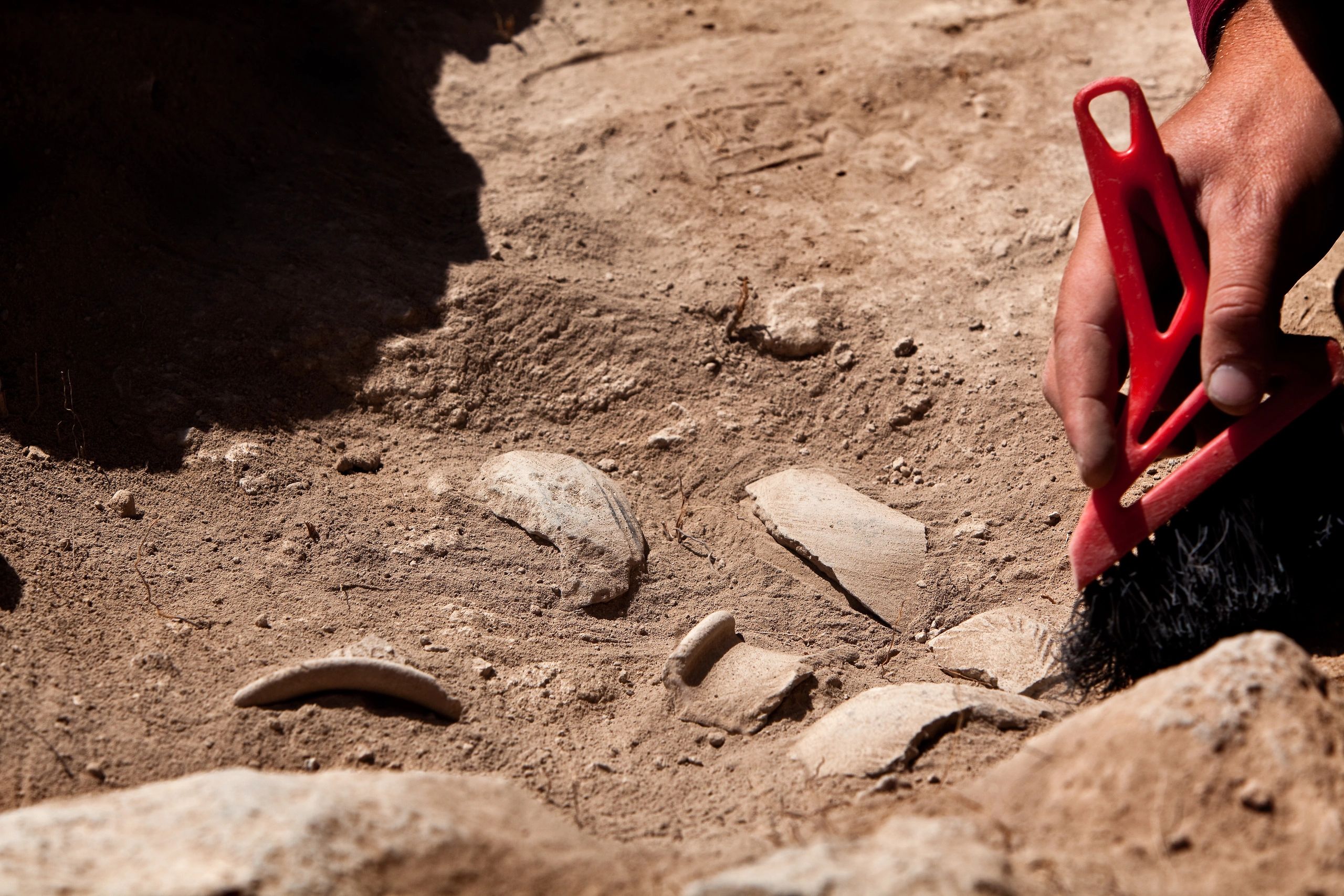
Recently a bowl containing charred suspected tea remains was dug up from the early stage of Warring States period tomb in Zoucheng City, Shandong Province, China. The bowl was found to be over 3,00 years old proving Chinese ancestors drank tea Current papers have cited China as the origin of tea. They looked at the genetic makeup of the tea tree's and how the geographic reagons environment shaped different changes that were tracked to over 20,000 years ago in the Chinese Wuyi-Mountain range. The region gave birth to tea trees that have spread all over the world.

From the natural distribution of tea plants, there are 23 genera and more than 380 species of Camelliaceae found to date, while there are 15 genera and more than 260 species in China, and most of them are distributed in Yunnan, Guizhou, and Sichuan regions. Due to the origin centers of many genera are concentrated China shows that southwest China is the birthplace of Camellia, which should be the birthplace of tea.
From the original pottery unearthed in China, it is speculated that China’s agriculture originated more than 10,000 years ago, so China has used tea for at least 10,000 years. As recorded in “Shen Nong Materia Medica”, it also has a history of more than 4,000 years. Tea was first made from wild leaves and used raw or boiled as food for medicine. Later, tea gradually developed into antidote, sacrifice, and beverage. Some people think that when Shen Nong boiled water in a cauldron the boiled water was slightly yellow. It produced fluid to quench thirst and refresh the mind and soul. It was found that it was a kind of medicine based on Shen Nong’s past experience of tasting herbs. This is the most common saying about the origin of tea in China.
Both the legend of Shen Nong and the archaeological evidence supports correlate to the beginning of farming in or around 5,000 to 10,000 years ago in southwest China. Tea would have been closely tied with the legend and and birth of farming in China.